
Testing, FAT & SAT
The 13 checks every panel passes, plus witnessed FAT and SAT on site.

A factory acceptance test (FAT) proves that a control panel and its program work as designed before the panel leaves the shop. A good FAT checks the build against the drawings, runs electrical tests, powers the panel up, checks every I/O point, tests sequences, interlocks and alarms, and ends with a punch list, retests and signed records.
The order matters. Electrical checks come before power-up, and power-up comes before any functional test.
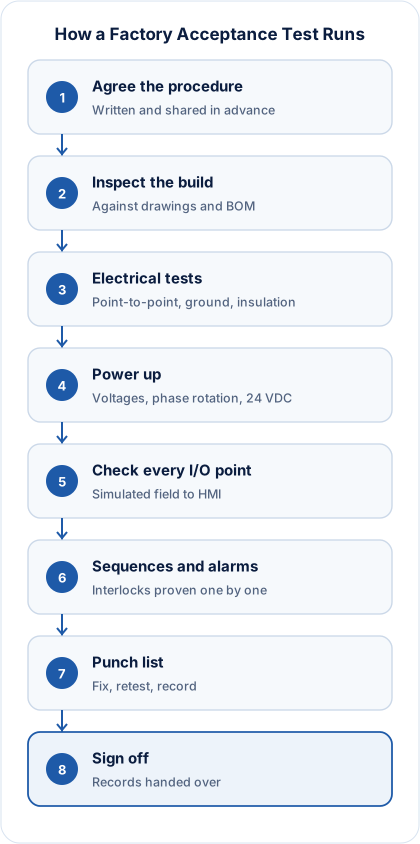
These are the 13 checks we carry out on every panel. Use them as a starting point for your own FAT procedure.

Agree the test procedure in advance, based on the control narrative. Decide who attends, how long it will take, and what counts as a pass. Bring the people who will run the system: an operator often spots screen problems an engineer misses.
Ask for the latest drawings, the I/O list and the program version to be on the table. Every change made during the FAT should be marked up on the drawings and saved in the program before the panel ships.
The paperwork is part of the panel. These are the records worth asking for.
| Record | Why it matters |
|---|---|
| Signed test procedure | Shows what was tested and who agreed it passed. |
| Punch list with closures | Proves every issue found was fixed and retested. |
| Marked-up drawings | Captures changes made during testing. |
| Final program backup | The exact version that passed FAT, ready for site. |
| Drive and overload settings | Needed for maintenance and replacements. |
A formal witnessed FAT is optional, but every panel should be tested. At WETS AI all 13 checks are done on every panel, and witnessed FAT is available on request.
From a few hours for a small panel to several days for a large system with many sequences. The procedure sets the length.
The engineer responsible for the system, someone who knows the process, and ideally an operator. The panel shop runs the test.
It is fixed, retested and recorded on the punch list before the panel ships. That is the point of testing in the shop.
The 13 checks every panel passes, plus witnessed FAT and SAT on site.
What each test proves, where it happens and who should attend.
The sections every narrative needs, with examples.
Send what you have: drawings, an I/O list or a short description of the process. We will reply with questions, a quotation and a schedule.